Your “very smart friend” may not be wrong when they say you should register for VAT.
But they may only be giving you half the advice.
Yes, VAT registration can allow you to claim valid input VAT and appear more established in certain business settings.
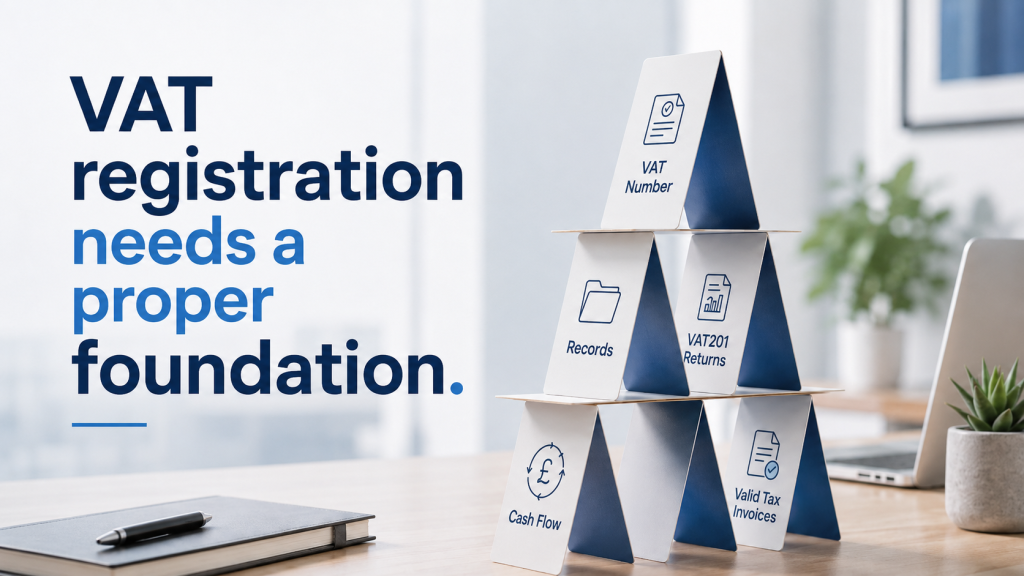
But once you register for VAT, you must charge VAT correctly, keep proper records, submit VAT201 returns, and pay VAT over to SARS when it is due.
VAT returns are usually submitted every two months, although some vendors may be required to submit monthly.
This means voluntary VAT registration also becomes a cash-flow planning issue.
The VAT you charge is not extra profit. It is VAT which must be paid to SARS.
What you cannot do with a VAT number
A VAT number is not something you “use when convenient.”
You cannot register one business for VAT and then use that VAT number to claim expenses for another business.
You also cannot register simply to claim VAT back if the business is not genuinely carrying on qualifying taxable activities.
SARS can request documents, review VAT returns, disallow incorrect claims, raise penalties and interest, or cancel the VAT registration.
Voluntary VAT registration can be useful.
But the real question is not just:
“Can I get a VAT number?”
It is:
“Is my business ready to operate as a VAT vendor?”
VAT can be complex, and the wrong registration decision can create unnecessary admin, cash-flow pressure, and SARS compliance risks.
We assist with VAT registrations where the business has a valid commercial reason, proper supporting records, and understands the ongoing SARS compliance obligations.
Before you apply, speak to an accountant who understands VAT and can help you assess whether registration makes sense for your business.
Disclaimer: This post is a general summary and does not constitute tax advice. VAT registration should be assessed based on the specific facts and circumstances of each business.